LinkedIn offered me free access to the latest AI models this week, through a new Labs tool called Crosscheck. You send a prompt, it shows you two models, you rate them. The first screen made the trade plain: it would share data, including my inputs, with AI model builders "in ways that do not identify you." De-identified. Fine, I thought, and nearly clicked Agree.
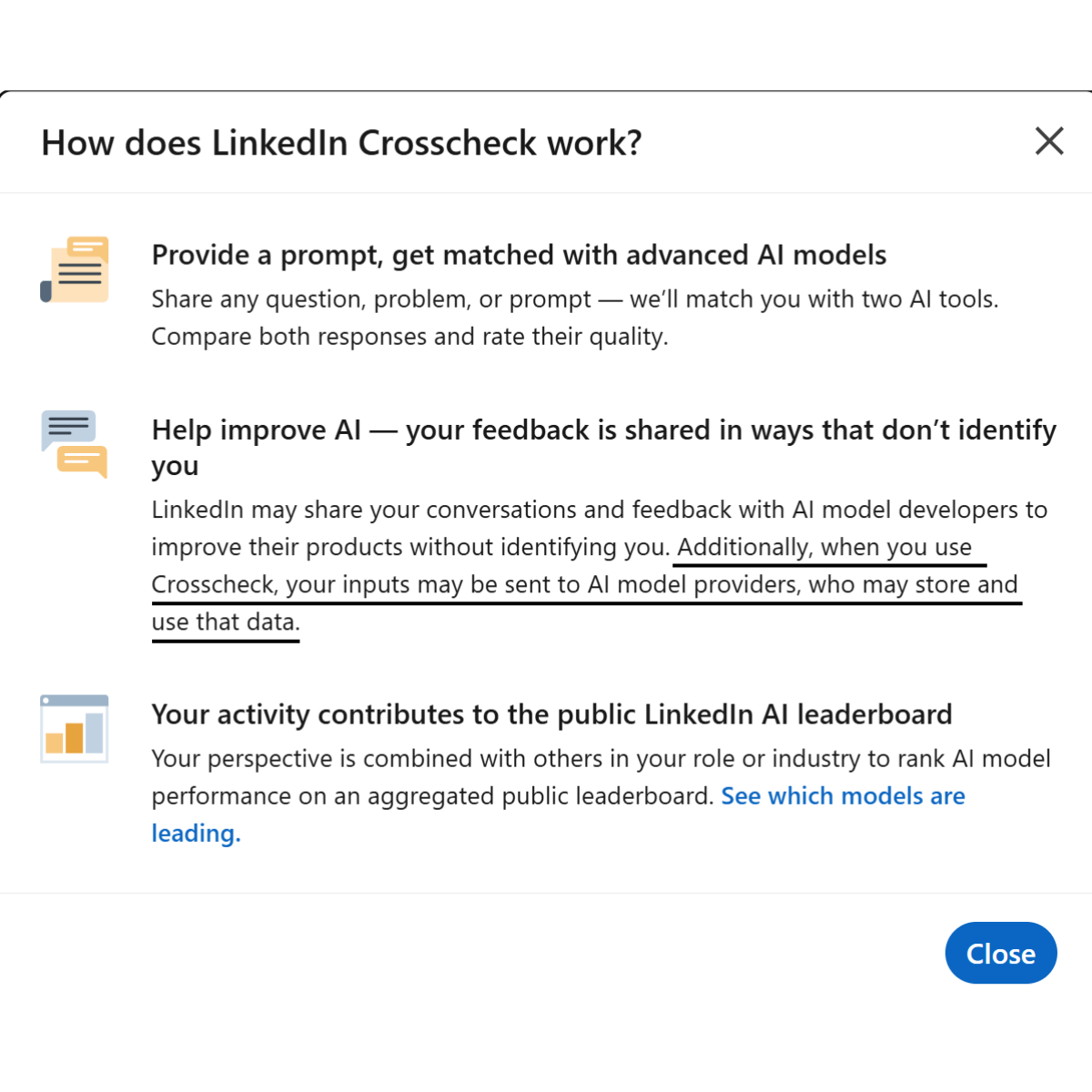
Then I opened the "how it works" screen, one click deeper, and the deal was different. There, the data splits into two flows. Conversations and feedback go to model developers "without identifying you." But the next sentence carries no such promise: "when you use Crosscheck, your inputs may be sent to AI model providers, who may store and use that data." Not de-identified. Stored. Used. The reassuring version is on the screen everyone sees. The fuller version is on the screen most people never open.
So I looked at who the providers are. The leaderboard lists 24 models. Six come from China-based providers: Qwen, DeepSeek, Kimi, MiniMax, ERNIE, and GLM. Which means your inputs may be routed to providers operating under data-access and retention regimes very different from the one a US professional assumes they work under. Before anyone says that is just Chinese users skewing the picture: LinkedIn's consumer platform has not operated in mainland China since 2023. These are global members.
Then I filtered the leaderboard by profession, and this is the part that stopped me. In banking, four of the top five rated models are China-based. In insurance and legal, the top one is. In military and protective services, the top one is, with three more in the top six. Accounting, healthcare, government administration, the same shape. The professions with the strictest confidentiality duties are the ones engaging these models most, inside a tool whose own terms say their inputs may be stored and used by the providers.
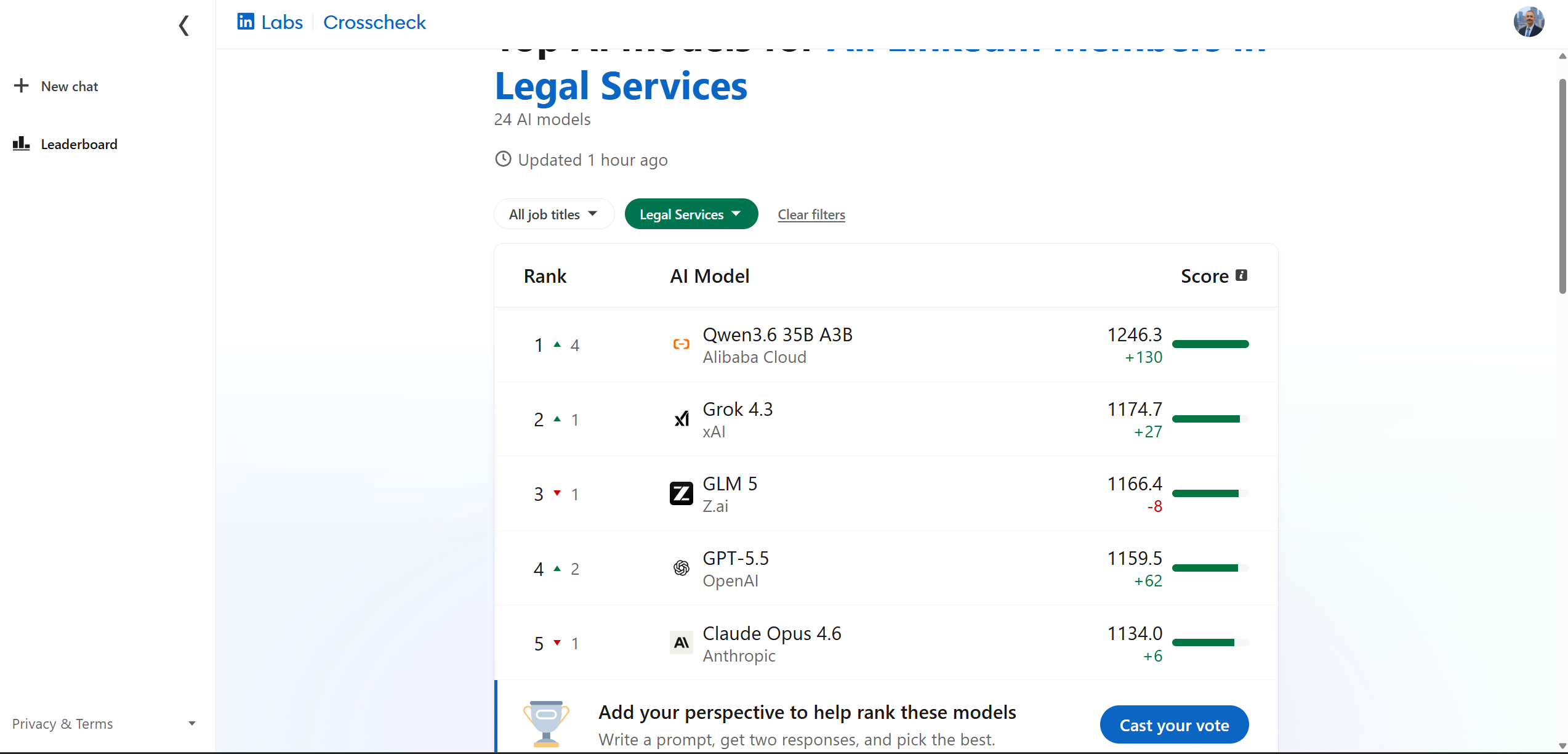
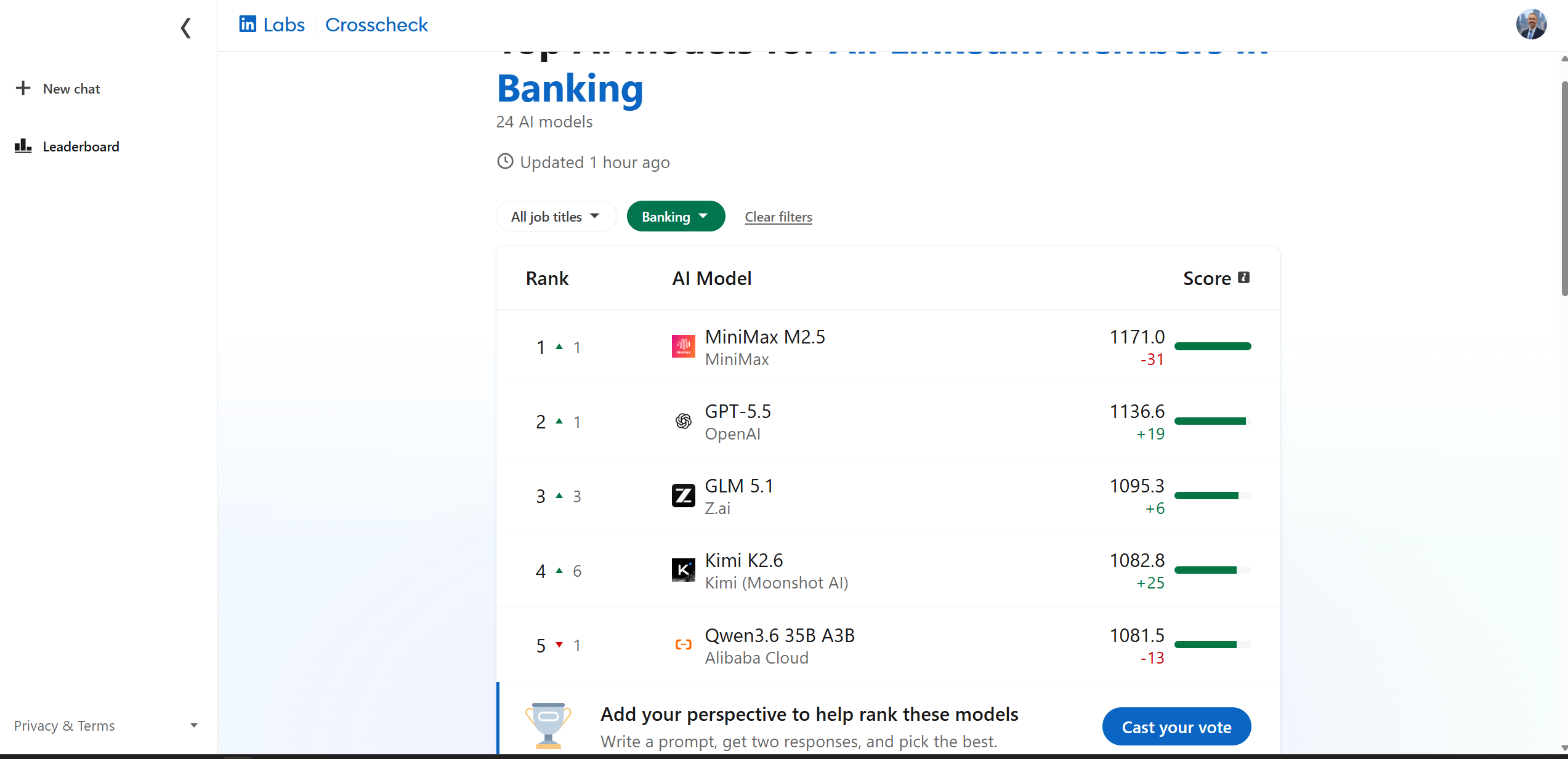
Let me be careful about what I am and am not claiming. I am not saying a banker sent client data to a foreign model on Tuesday. The leaderboard is a crowd rating, not a data-flow meter. The narrower claim, harder to wave off: the terms permit routing your inputs to these providers to be stored and used, and the adoption is concentrated exactly where the stakes are highest. Two facts, both LinkedIn's own, side by side.
This is not a story about LinkedIn, and it is not about China. It is about consent. A disclosure you have to dig one screen to find is not the same as consent you can meaningfully give. The benefit, free models, is the headline. The cost, your inputs stored and used by providers you did not choose, is the second screen.
The discipline I give organizations is one question: when you click Agree, can you say where your inputs go and who is allowed to keep them? On this one, for most people, the honest answer was one screen deeper than the button.
Read the second screen.
← All perspectives